New South Wales - Colonial: 1857-1900.
Delivery envelope: NC-EO-4.
Queensland
South Australia
Tasmania
Victoria
Western Australia
International
Special aspects
Delivery envelope: NC-EO-4.
- Australia 1901-1988
- New South Wales
- Overview of NSW
- Telegraph lines
- Telegraph Offices
- Date stamps
- Forms
- Envelopes
- Instructional annotation
- Collect
- Delayed
- Free
- Immediate Urgent
- Reply paid
- Rates
- Rates
- Summary of Telegram rates 1858-1900.
- NSW - Qld rates 1858 to 1870
- NSW - Vic rates 1858 to 1870
- Stamps
- 1871 Telegraph stamps
- 1885 proposal
- 1893 proposal
General characteristics:
| Heading and notes: | No form number. TELEGRAM, IMMEDIATE printed in the top rectangular frame in blue. |
| Message area: | Blank. |
| Reverse side: | Has printed seal on flap. |
| Colours (text & envelope): | Blue on blue. |
| Size of envelope overall: | 81 × 137 mm. |
Distinctive characteristics of the form:
- printed on blue paper;
- blue rectangular frame (9 ×54 mm) with reverse printing of the heading;
- CHARGES TO PAY with 2 lines of information notes in lower left corner;
- reverse side has an embossed seal on flap. The central oval is uncoloured.
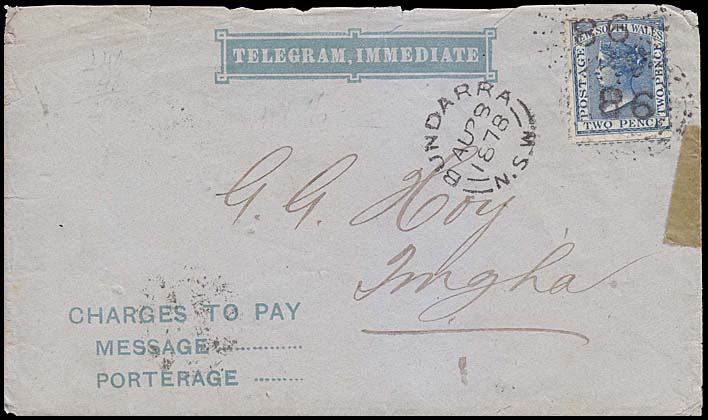 |
NC-EO-4A.
For delivery from Bundarra to Tingha. See another example of this envelope used at Molong |
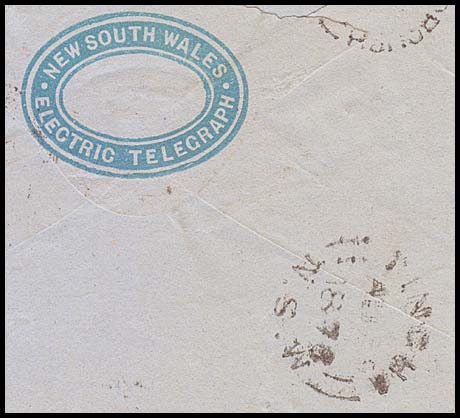 |
NC-EO-4A - half of the reverse side showing greater detail.
Has a reasonable strike of a scarce Tingha backstamp of 29 August. The peak of the flap has an embossed oval with Flap has rounded peak and moderately curved sides. |
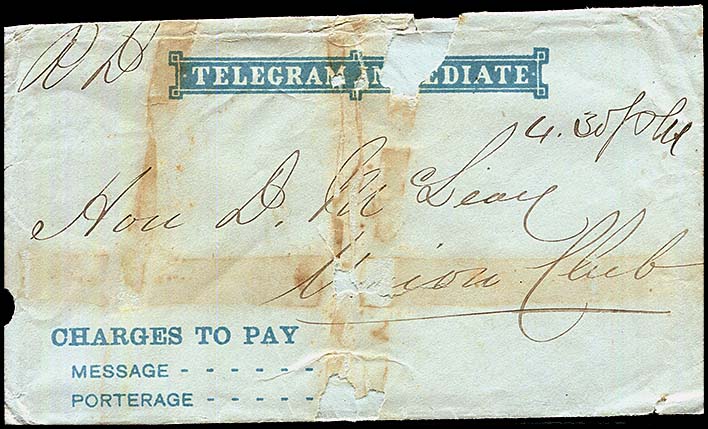 The club was established in 1857 and located in Blight Street, Sydney. Its objectives were to create a leisure space for working-class people. The original Union Club building was a Georgian mansion on Bligh Street and had been designed by Francis Greenway.
In keeping with respecting Sydney's historical past, the building was later demolished to facilitate the construction of the Wentworth Hotel. |
NC-EO-4B. For delivery to the Union Club. The format differs in the following ways from EO-4A:
|
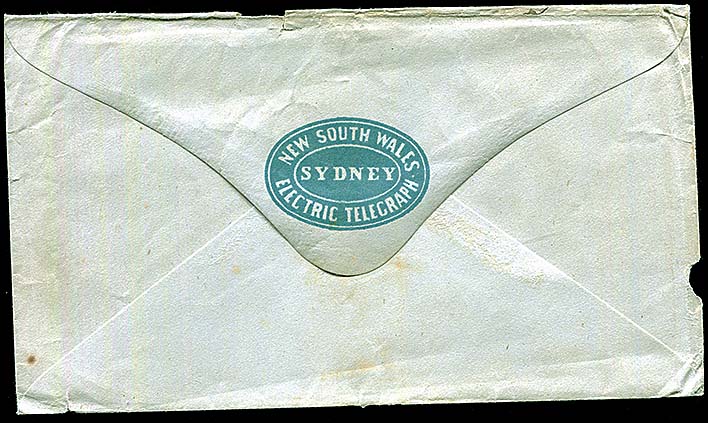
Same design of flap as for EO-4A and the seal is printed not embossed. The style of lettering in the oval is significantly different. A small stop splits top and bottom lettering at the right and it is much smaller than the stops on each side of EO-4A. |
|
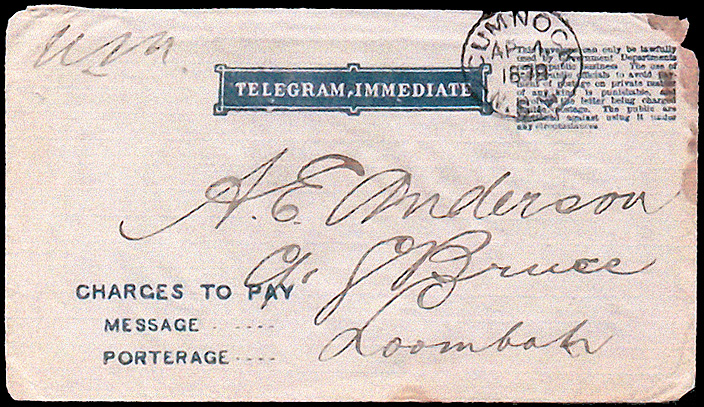 |
NC-EO-4C.
Used at Cumnock Characteristics:
Source: Australian Postal History. |
Details of use and rarity.
| Form sub-number |
Schedule number | Earliest recorded date | Rarity rating |
| EO-4A | None | 28 August 1878 at Bundarra. | RRRR |
| EO-4B | None | No indication of the date but probably used at GPO Sydney. Only recorded example. |
RRRR |
| EO-4C | None. | 4 April 1878 at Cumnock. | RRRR |