Ordinary rate delivery form: NC-DO-9.
- Australia 1901-1988
- New South Wales
- Overview of NSW
- Telegraph lines
- Telegraph Offices
- Date stamps
- Forms
- Envelopes
- Instructional annotation
- Collect
- Delayed
- Free
- Immediate Urgent
- Reply paid
- Rates
- Rates
- Summary of Telegram rates 1858-1900.
- NSW - Qld rates 1858 to 1870
- NSW - Vic rates 1858 to 1870
- Stamps
- 1871 Telegraph stamps
- 1885 proposal
- 1893 proposal
General characteristics:
| Heading and notes: | No form number. Heading changed to NEW SOUTH WALES POST AND TELEGRAPH. |
| Message area: | Boxes numbered to 35. |
| Reverse side: | Boxes continuing the numbering to 100 or to 110. No Regulations. |
| Colours (text & form): | Orange on yellow. |
| Size of form overall: | 225 × 187 mm. |
| Size of datestamp box: | 20 × 34 mm. |
9A: boxes are numbered on both left and right sides;
9B: boxes are numbered on the right side only;
9C: reference to Railway Offices has been added at the base.
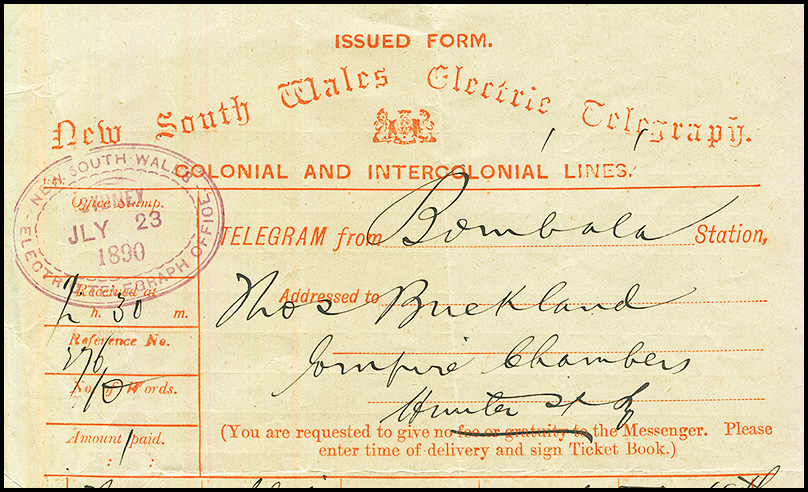 |
NC-DO-9A.
Bombala to Hunter Street, Sydney CBD. Use of the rare RO7-ETO date stamp for the Electric Telegraph Office. |
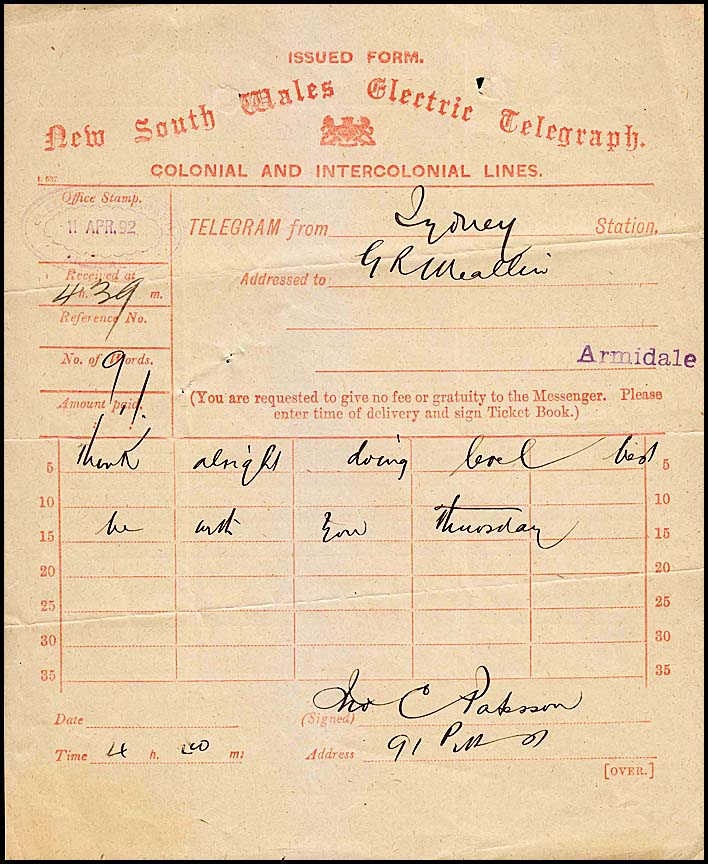 |
NC-DO-9A.
Sydney to Armidale A very rare oval Electric Telegraph date stamp for Armidale. Characteristics:
|
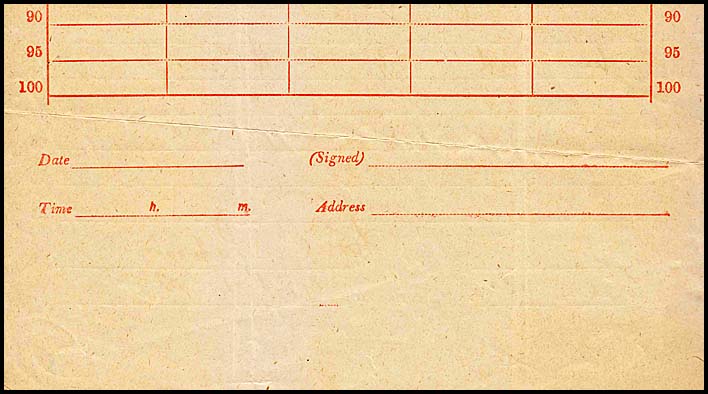 |
NC-DO-9A (reverse side).
Show numbering on both sides to 100 and no regulations.
|
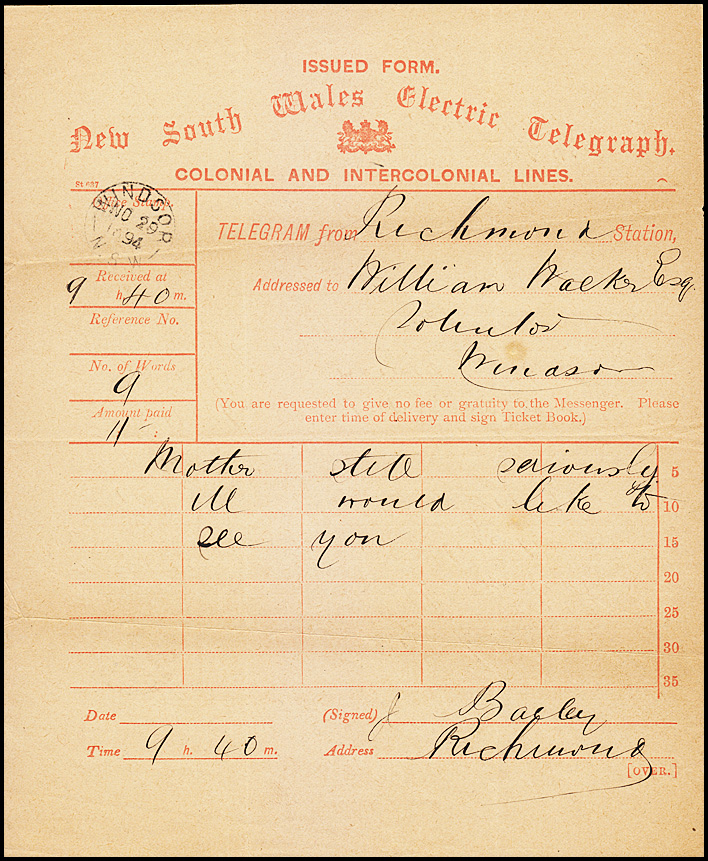 |
NC-DO-9B.
Richmond to Windsor Characteristics:
|
A variation of this form was introduced possibly during the 1880s. Little is known of the format. Hancock has a front page (p. 166) and part of another form is known used for a message from Melbourne to Binalong on 1 February 1901. The text at the bottom of the form reads: |
Characteristics:
|

Details of use and rarity.
| Form sub-number |
Schedule number | Earliest recorded date | Rarity rating |
| DO-9A | Stores number t. 637 on the front and St. 637 reverse. |
23 July 1890 at Sydney Electric Telegraph Office. | RRR |
| DO-9B | Stores number St. 637 on front only. | 29 November 1894 at Windsor. | RR |
| DO-9C | None. | 13 February 1894 at Lindfield (H p.166) |
RR |