Australia - Brown years: 1923-1939.
Ordinary rate delivery form: AB-DO-7.
Queensland
South Australia
Tasmania
Victoria
Western Australia
International
Special aspects
Ordinary rate delivery form: AB-DO-7.
- Australia 1901-1988
- New South Wales
- Overview of NSW
- Telegraph lines
- Telegraph Offices
- Date stamps
- Forms
- Envelopes
- Instructional annotation
- Collect
- Delayed
- Free
- Immediate Urgent
- Reply paid
- Rates
- Rates
- Summary of Telegram rates 1858-1900.
- NSW - Qld rates 1858 to 1870
- NSW - Vic rates 1858 to 1870
- Stamps
- 1871 Telegraph stamps
- 1885 proposal
- 1893 proposal
General characteristics:
| Heading and notes: | Form numbers T. G. 42. Heading is RECEIVED TELEGRAM and is only one section. Advertising box top left has a single thin outline. |
| Message area: | Blank - occupies about 70% of the form. |
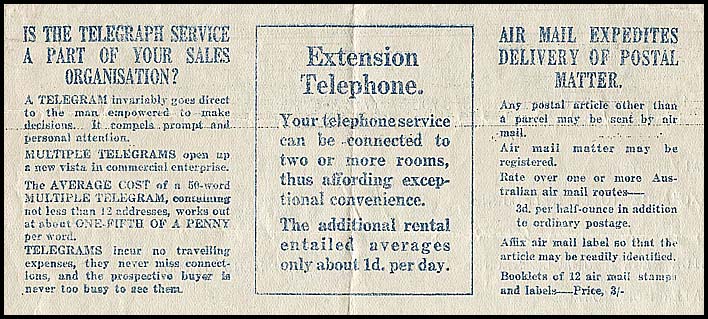
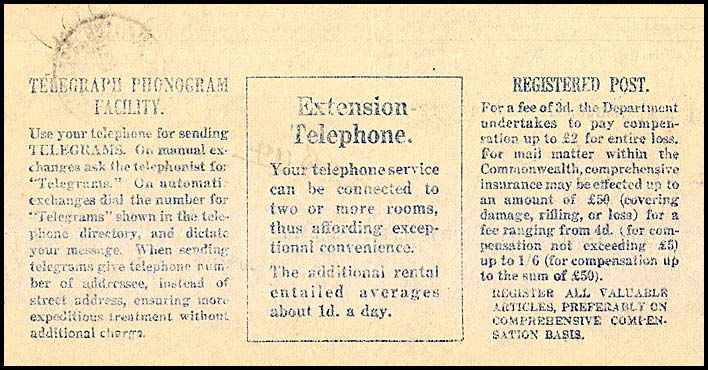
| Reverse side: | Advertisements - 3 on earlier issues, 1 on later. |
| Colours (text & form): | Blue on cream but reverse is orange on the 1939 form. |
| Size of form overall: | 123 × 213. |
| Size of datestamp box: | 28 × 46 mm. |
Distinctive characteristics of the form:
- forms with number T.G. 42B are shown on another page
(Form AB-DO-7B); - has an advertising box in the top left corner;
- entry under the advertising box in the heading is "Station from";
- See the overview of advertising on telegram stationery elsewhere.
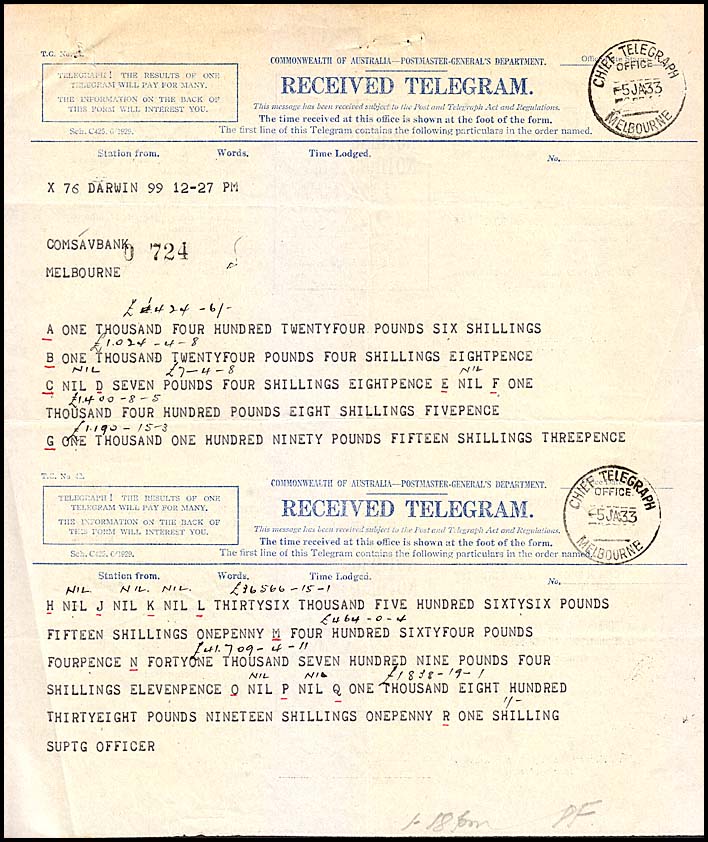
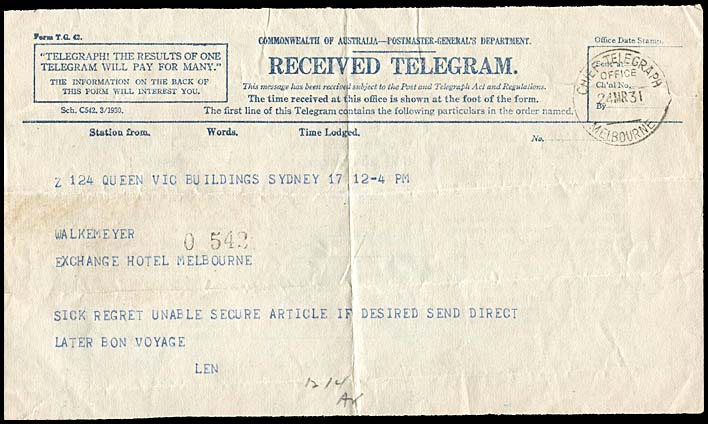
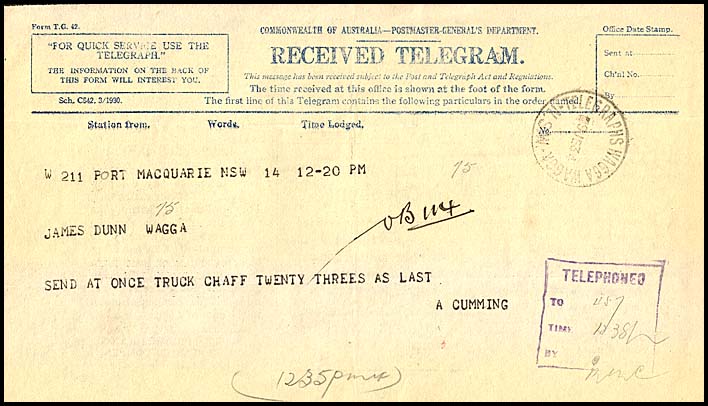
These type 7 forms were first printed in June 1929 whereas the forms with the type 7B format having the same design but intended for use as rolls on teletype machines were printed from April 1933.
The main distinctions amongst the three formats for the type 7A forms are:
| Format number |
Outline for box. | Advertisment at top left | Date stamp box |
| 7A | Single line | Telegraph! ... in 2 full lines followed by "The Information ..." in the same font. |
Just top line. |
| 7C | Double line | Telegraph! ... in 2 full lines followed by "The Information ..." in a smaller font. |
Top and left line with 3 dotted lines inside box. |
| 7D | Double line | For Quick Service ... in 3 lines followed by "The Information ..." in a smaller font. |
Top and left line with 3 dotted lines inside box. |

Details of use and rarity.
| Form sub-number |
Schedule number | Earliest recorded date | Rarity rating |
| DO-7A | Sch. C425. - 6/1929. | 5 January 1933 at CTO Melbourne. | C |
| DO-7C | Sch. C542. 3/1930. | 24 March 1931 at CTO Melbourne. | C |
| DO-7D | Sch. C542. 3/1930. | 9 June 1934 at Wagga Wagga. | NC |